29-09-2025
How Families and Caregivers Use the Patient Care Plan PCP
Written By: Nagaraju Raparthi, Senior Content & Care Story Writer
Introduction:
When families hire a caregiver, the biggest question is: Will they follow our instructions properly?
At Life Circle, we ensure that families and caregivers are always on the same page through a structured Patient Care Plan. This plan becomes the bridge that connects family expectations, Caregiver Attendant tasks, and supervisory monitoring.
What Is a Patient Care Plan (PCP)?
Definition:
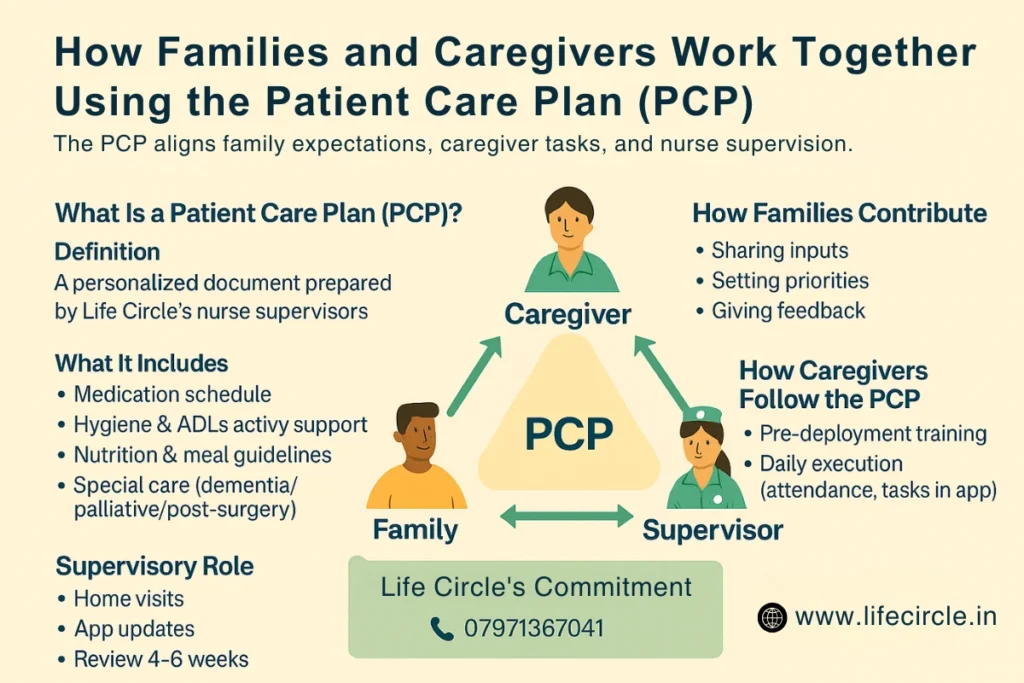
A Patient Care Plan is a personalized document prepared by Life Circle’s nurse supervisors after assessing the senior’s health condition and family’s requirements.
What It Includes
- Medication schedules
- Hygiene and daily activity support
- Nutrition and meal guidelines
- Mobility and exercise plans
- Special care needs (Dementia, Palliative, post-surgery)
How Families Contribute to the Patient Care Plan PCP :
Sharing Detailed Inputs:
Families provide key details about the senior’s habits, food preferences, medical history, and daily routine.
Setting Priorities
Families can highlight their top concerns — e.g., medication reminders, fall prevention, or emotional support.
Giving Feedback:
Families are encouraged to give ongoing feedback via phone, App, or supervisor visits so the PCP remains up to date.
How Families and Caregivers Use the Patient Care Plan PCP
Pre-Deployment Training:
Before joining duty, caregivers are trained on the specific PCP of the assigned senior.
Daily Execution:
Caregivers record attendance, tasks completed, and any issues in the Life Circle Mobile App.
Escalation Support:
If a caregiver faces difficulty, they escalate the issue to supervisors for guidance.
Supervisory Role in the Patient Care Plan :
- Nurse supervisors conduct regular home visits to check compliance.
- Families receive updates via app notifications and supervisor reports.
PCPs are formally reviewed every 4–6 weeks to reflect changes in health condition.
⭐Customer Reviews
“The Patient Care Plan gave us confidence that my father’s care was consistent. The caregiver followed the plan daily, and supervisors ensured quality.”
— Sneha R., Bangalore
“Life Circle’s PCP system made all the difference. We could easily track tasks on the app and give feedback. It felt like a real partnership.”
— Vikram P., Hyderabad
Life Circle’s Commitment
The PCP ensures teamwork between families, caregivers, and supervisors. By making responsibilities clear and measurable, Life Circle guarantees that seniors get safe, reliable, and compassionate care every day.
Conclusion
When families and caregivers work together through the Patient Care Plan, seniors benefit from structured, personalized, and consistent support.
Frequently Asked Questions
What is a patient care plan PCP and why is it important in elder care?
A patient care plan PCP is a personalized care document prepared by Life Circle’s nurse supervisors that outlines a senior’s daily care routines, medication schedules, dietary needs, mobility plans, and special health requirements. It is important because it ensures that every caregiver follows a consistent, well-defined approach to care — reducing errors, improving outcomes, and giving families confidence that their loved ones are receiving quality attention every day.
How does family caregiver coordination work within the Life Circle PCP system?
Family caregiver coordination is a core part of the Life Circle PCP process. Families are involved from the very beginning — sharing inputs about the senior’s habits and preferences, setting care priorities, and providing ongoing feedback through the Life Circle Mobile App or supervisor visits. This collaborative approach ensures the care plan truly reflects the family’s expectations and the senior’s individual needs.
How often is the patient care plan PCP updated at Life Circle?
The patient care plan PCP at Life Circle is formally reviewed every 4 to 6 weeks. However, if there is a significant change in the senior’s health condition, a review can be triggered earlier. Nurse supervisors lead the review process and incorporate feedback from both the family and the caregiver to ensure the plan remains accurate and effective.
What happens if a caregiver does not follow the patient care plan PCP?
Life Circle has a multi-layered accountability system to ensure PCP compliance. Caregivers log their daily tasks on the Life Circle Mobile App, which families and supervisors can monitor in real time. Nurse supervisors also conduct regular and surprise home visits to verify that the care being delivered matches the documented plan. If a caregiver is found to be non-compliant, supervisors intervene immediately, provide corrective guidance, or arrange a replacement to ensure the senior’s care is never compromised.