Life Circle Joins the Asia-Pacific Care Forum to Champion Inclusive and Sustainable Care
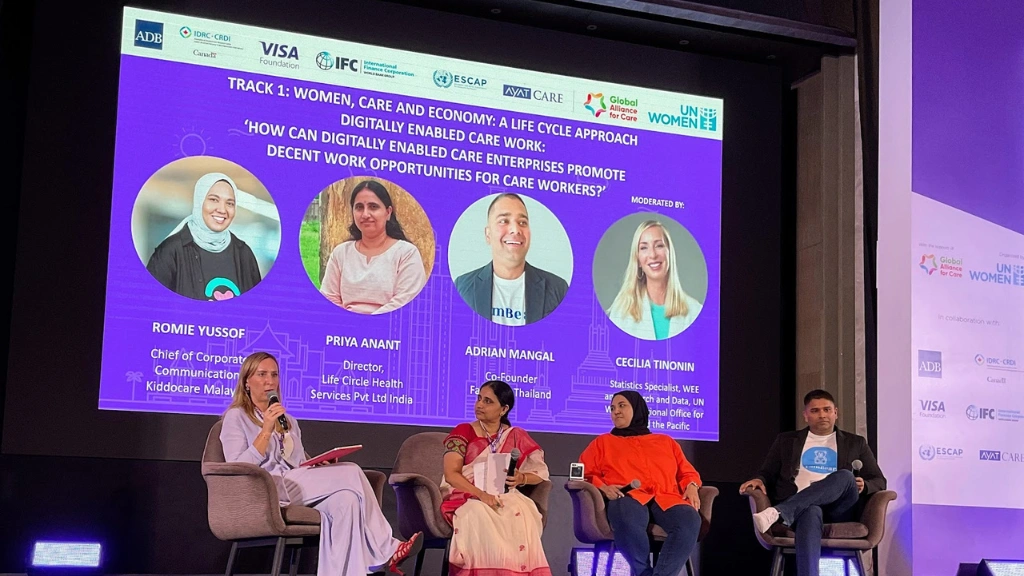
The Asia-Pacific Care Forum, co-organized by UN Women and the Asian Venture Philanthropy Network (AVPN), brought together global leaders, policymakers, and social entrepreneurs to shape the future of care work and women’s economic empowerment across the region. Representing India’s growing care innovation landscape, Ms. Priya Anant, Co-founder and Chief Customer Officer of Life Circle Health Services, participated in a landmark dialogue on employer-supported care models and the urgent need for scalable, dignified eldercare solutions. Her presence at the Asia-Pacific Care Forum highlighted how digital care innovations and inclusive entrepreneurship are redefining caregiving in Asia.
The Looming Care Crisis Driving Caregiving in Asia
Across the Asia-Pacific region, societies are confronting an accelerating care crisis that threatens both workforce productivity and social equity. In India alone, the elderly population is projected to reach 193 million by 2031 (Government of India data), and the caregiving gap is widening at an alarming pace. Research by the Boston Consulting Group (2023) reveals that 88% of Indian employees identify as caregivers — significantly higher than the regional average of 60%.
Among these working caregivers, 71% are managing dual responsibilities: caring for both children and elderly family members simultaneously. This compounding burden falls disproportionately on women, further widening gender disparities in workforce participation and economic opportunity.
Globally, we talk about the double burden of care. In India, I call it a 16x burden, shared Priya Anant during the forum session. In most families, women shoulder care responsibilities for two sets of parents, often with little institutional or workplace support.
This reality makes the conversation happening at the Asia-Pacific Care Forum not just timely — it is essential. Without systemic interventions, the caregiving crisis will continue to suppress women’s economic empowerment and limit inclusive growth across the region.
Employer-Supported Care: A New Frontier for Women's Economic Empowerment
One of the most compelling discussions at the forum centered on how employers can become active partners in solving the care crisis. Priya emphasized that employer-supported eldercare is not merely a corporate social responsibility initiative — it is a strategic investment in employee retention, productivity, and women’s economic empowerment.
Drawing on Life Circle’s experience in providing over 100,000 days of geriatric care annually, she outlined a set of practical and scalable care delivery models designed for corporate partnerships. These include:
- Custom caregiving packages tailored for employees with ageing parents at home
- Preventive care and health awareness programs that reduce caregiver stress and absenteeism
- On-site caregiving and nursing stations to provide immediate workplace assistance
- Knowledge and peer-support sessions for employees who are managing active care duties alongside professional responsibilities
These are not perks; they are pillars of a humane and resilient workforce, Priya stated. When employees are supported in their care roles, they bring empathy, efficiency, persistence, and emotional intelligence to work.
By integrating structured care delivery models into workplace ecosystems, companies can directly reduce the invisible tax that caregiving places on women employees — enabling them to remain in the workforce, advance in their careers, and contribute meaningfully to economic growth.
Home Healthcare Innovation: Scaling with Dignity
Beyond the employer-employee relationship, the Asia-Pacific Care Forum also surfaced a deeper structural challenge: the caregiver supply gap. Despite India’s large and youthful population, relatively few young people are choosing caregiving as a viable profession. Social stigma, low wages, and poor working conditions continue to deter entry into the sector.
Many fear being treated like domestic workers, Priya noted candidly. We have a shared responsibility — to employers, providers, and to society as a whole — to elevate caregiving as a profession of dignity.
This is where home healthcare innovation becomes a powerful lever for change. Life Circle is addressing the supply gap through a multi-pronged approach:
- Establishing 10 caregiver training institutes across India, focused on skill development, professional ethics, and fair employment practices
- Piloting shared care models that distribute caregiving responsibilities across trained professionals, reducing burnout and improving quality
- Developing cost-subsidization frameworks to make high-quality home care accessible to middle-income households without compromising caregiver wages or service standards
These home healthcare innovation initiatives are designed not only to improve care outcomes for elderly recipients but also to create dignified, sustainable livelihoods for caregivers — many of whom are women from economically vulnerable backgrounds. In doing so, Life Circle is demonstrating how inclusive care entrepreneurship can simultaneously address gender inequality, workforce development, and public health.
Inclusive Care Entrepreneurship: Building Cross-Sectoral Bridges
A recurring theme at the Asia-Pacific Care Forum was the critical importance of cross-sectoral collaboration. No single actor — whether government, business, or civil society — can solve the care crisis in isolation. What is needed is a coordinated ecosystem where each stakeholder plays a defined and accountable role.
For social enterprises like Life Circle, inclusive care entrepreneurship means going beyond service delivery to actively shape policy conversations, influence employer behavior, and demonstrate that care can be both financially sustainable and socially transformative. Priya’s participation at the forum exemplified this approach — bringing ground-level data and operational insights from India’s care economy into a regional policy dialogue.
The forum provided a platform for practitioners to share what is working, what needs to scale, and what systemic barriers remain. Life Circle’s model — combining compassion, technology, and community — was highlighted as a replicable example of how digital tools can be integrated into home-based care without losing the human connection that makes care meaningful.
Inclusive care policies and investments aren’t expenses, Priya concluded. They are catalysts for economic growth, gender equality, and human dignity.
UN Women Care Partnership: Recognizing Digital Innovation in Eldercare
Life Circle’s invitation to the Asia-Pacific Care Forum reflects the organization’s growing recognition within the UN Women care ecosystem as a pioneer in digitally enabled home healthcare. The forum — co-organized under the UN Women care framework — specifically sought voices from social entrepreneurs who are combining innovation with equity to advance gender-responsive care systems.
Life Circle was acknowledged at the forum for its ability to harness technology to improve eldercare outcomes while simultaneously empowering women — both as beneficiaries of better care support and as trained, fairly compensated caregiving professionals. This dual impact positions Life Circle not just as a healthcare provider, but as a key contributor to the broader agenda of women’s economic empowerment across Asia.
The UN Women care initiative recognizes that without a functioning, equitably structured care economy, progress on gender equality will remain limited. By supporting organizations like Life Circle, the initiative is investing in proof points that show care and economic growth are not in tension — they are deeply interdependent.
About the Asia-Pacific Care Forum
The Asia-Pacific Care Forum convened policymakers, investors, and social entrepreneurs from across the region to share actionable strategies for building gender-responsive, inclusive care systems. The forum is co-organized by UN Women and the Asian Venture Philanthropy Network (AVPN), and focuses on translating care economy research into scalable, practitioner-led solutions.
Life Circle Health Services was recognized at the forum for its innovative approach to digitally enabled home healthcare — combining compassion with technology to improve eldercare outcomes and empower women in the workforce. The organization’s insights were featured in the Forum Highlights and Recommendations for Practitioners report, published by UN Women and AVPN in 2025.
Read the Forum Highlights: Highlights and Recommendations for Practitioners – Asia-Pacific Care Forum (UN Women & AVPN, 2025
Published: October 2025
Category: Leadership & Advocacy
Tags: UN Women, AVPN, Life Circle Health Services, Care, Women’s Economic Empowerment, Home Healthcare Innovation
This article was contributed by Priya Anant, Co-Founder and Chief Customer Officer at Life Circle Health Services. Priya leads quality and training programs that empower caregivers and ensure dignified home healthcare for seniors across India.