06-10-2025
Balancing Family Expectations Care Standards at Life Circle
Written By: Nagaraju Raparthi,Senior Content & Care Story Writer
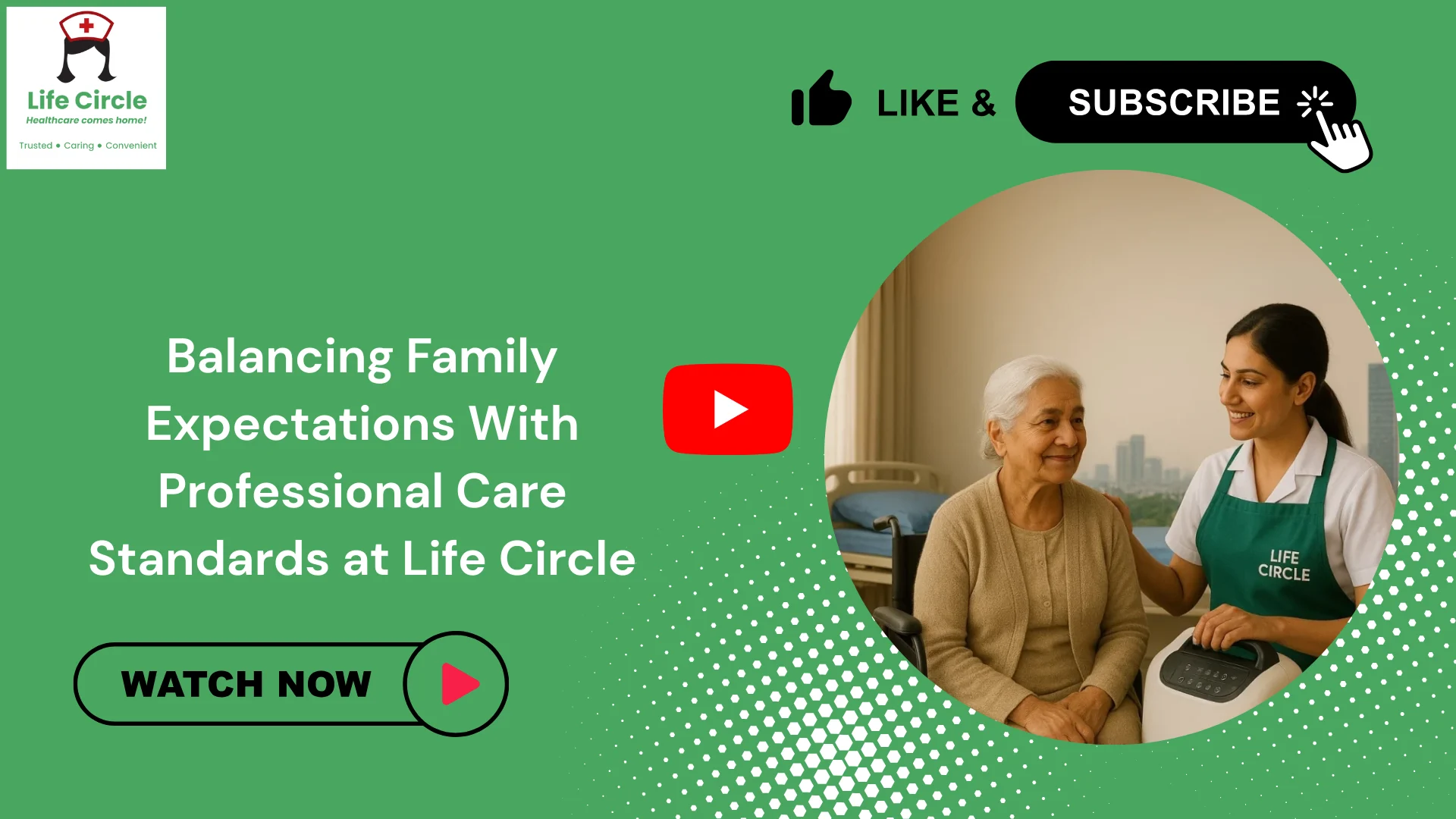
Introduction: Why Balancing Family Expectations Care Standards Matters
When families hire a Caregiver, they naturally expect services tailored to their loved one’s unique needs, personal routines, and household preferences. However, caregivers are also professionally bound to follow structured guidelines and the Patient Care Plan (PCP) designed by Life Circle’s qualified nurse supervisors.
Balancing family expectations care standards is not just a logistical challenge — it is the very foundation of delivering safe, ethical, and compassionate elder care. When both sides are aligned, seniors receive consistent support, families gain peace of mind, and caregivers can perform their roles with confidence and dignity.
At Life Circle, this balance is built into every stage of the caregiving process — from onboarding and orientation to daily supervision and open communication. Understanding how this works can help families feel more informed, involved, and assured in their elder care decisions.
Understanding Family Caregiver Expectations
Every family is different, and so are their expectations when it comes to elder care. While most families share the common goal of keeping their loved ones safe and comfortable, the specific requests they bring to caregiving relationships can vary significantly. Here are the most common family caregiver expectations that Life Circle encounters:
Personalized Attention and Cultural Sensitivity
Families often want caregivers to follow established household routines — specific meal timings, food preferences, religious practices, and cultural customs. This is not only understandable but encouraged. Respecting a senior’s background and lifestyle contributes deeply to their emotional well-being and sense of dignity.
Life Circle caregivers are trained to adapt to such preferences within the boundaries of the care plan, ensuring that personalization does not compromise safety or professional standards
Multi-Tasking and Extended Household Requests
One of the most common points of friction in elder care is when families request caregivers to take on additional household responsibilities — such as cooking full meals for the entire family, running errands, or babysitting grandchildren. While these requests come from a place of practicality, they can significantly dilute the quality of focused elder care.
When a caregiver is pulled in multiple directions, the senior’s core needs — mobility assistance, medication compliance, hygiene, and emotional support — may be unintentionally neglected. Life Circle addresses this head-on through clear scope-of-work definitions established during onboarding.
3. Emotional Connection and Companionship
Beyond physical assistance, families hope that caregivers will form a genuine bond with their loved ones. Seniors often experience loneliness, especially those with limited mobility or cognitive challenges. Families want to know that their elderly parent or grandparent is not just being physically cared for, but also emotionally supported.
This expectation is not only valid — it is central to Life Circle’s elder care family balance philosophy. Caregivers are trained in empathy, active listening, and compassionate communication to ensure they connect meaningfully with the seniors they serve.

Life Circle Care Standards: The Professional Framework
Life Circle care standards are designed to ensure that every senior receives consistent, high-quality care that is both medically sound and ethically grounded. These standards guide how caregivers operate, what responsibilities they hold, and how they interact with seniors and families.
Defined Scope of Work
Caregivers at Life Circle are specifically trained to provide elder care services — including personal hygiene, feeding assistance, mobility support, companionship, and medication compliance monitoring. This focused scope ensures that caregivers can give their full attention and energy to the senior in their care.
Tasks that fall outside this scope — such as general housekeeping for the entire household or childcare — are not included in the caregiver’s role. This is not a limitation but a deliberate standard that protects the quality of elder care.
Safety, Compliance, and Medical Guidelines
Every caregiver follows a Patient Care Plan (PCP) developed by Life Circle’s nurse supervisors. This plan outlines the senior’s specific medical needs, daily routines, dietary requirements, mobility guidelines, and emergency protocols.
Adhering to the PCP ensures medical safety, infection control, and consistency in care delivery. It also provides a clear reference point for families who want to track their loved one’s progress and overall well-being.
Ethical Boundaries and Dignity in Care
Life Circle care standards place a strong emphasis on maintaining the dignity, privacy, and respect of every senior. Caregivers are trained to uphold confidentiality, avoid overstepping personal boundaries, and treat every individual with the sensitivity they deserve.
Maintaining these ethical boundaries also protects caregivers from being overburdened with unrelated responsibilities, allowing them to focus on delivering their best professional performance.
How Life Circle Bridges the Gap: Elder Care Family Balance in Practice
Achieving elder care family balance requires more than good intentions — it demands structured systems, proactive communication, and responsive support. Here is how Life Circle bridges the gap between family expectations and professional care standards:
Pre-Care Orientation and Expectation Alignment
Before care services begin, Life Circle’s nurse supervisors conduct a detailed pre-care orientation with the family. During this session, the care plan is explained, the caregiver’s defined responsibilities are outlined, and any family-specific preferences are discussed and incorporated where appropriate.
This proactive approach prevents misunderstandings before they arise and ensures that both families and caregivers start the engagement on the same page.
Transparent Communication Channels
Families can stay updated on their loved one’s care through the Life Circle app, which provides real-time updates, care logs, and direct communication with supervisors. If a family has a new request or concern, it can be raised through the app or during scheduled supervisor visits.
Adjustments to the care plan are reviewed and implemented when they are medically safe and operationally feasible. This two-way communication builds trust and ensures families always feel heard and involved.
Supervisor-Mediated Support
Life Circle’s nurse supervisors play an active role in mediating between families and caregivers. If a disagreement or misalignment occurs, the supervisor steps in to facilitate a constructive conversation — clarifying roles, addressing concerns, and finding practical solutions that prioritize the senior’s well-being.
This layer of professional oversight is one of the key differentiators of Life Circle care standards and adds an essential safety net for both families and caregivers.
Caregiver Replacement Policy
In situations where a caregiver-family relationship faces significant challenges despite mediation, Life Circle ensures a smooth caregiver replacement within 24 to 48 hours. This policy underscores the organization’s commitment to continuity of care and family satisfaction without unnecessary delays.
Benefits of Balanced Elder Care: Who Gains and How
When family expectations and professional care standards are successfully aligned, the benefits extend to everyone involved in the caregiving relationship.
For Seniors: Elders receive consistent, safe, and compassionate care delivered by a focused and well-supported caregiver. They experience fewer disruptions in routine, greater dignity, and a higher overall quality of life.
For Families: Families gain genuine peace of mind knowing that their loved one is in capable, ethical, and professionally accountable hands. Clear communication channels keep them informed without requiring constant supervision.
For Caregivers: Caregivers benefit from respectful working conditions with well-defined responsibilities. When they are not overburdened with unrelated tasks, they can deliver higher quality care and build more meaningful relationships with the seniors they support.
Life Circle's Advantage in Balancing Family Expectations Care Standards
Life Circle stands apart in the home elder care space because of its systematic, compassionate, and transparent approach to balancing family expectations care standards. Key advantages include:
- Comprehensive Patient Care Plans that clearly define the scope, goals, and boundaries of care for every senior.
- Caregiver training in empathy, communication, and cultural sensitivity to ensure emotional connection alongside professional competence.
- Dedicated nurse supervisor support to proactively mediate, guide, and resolve family-caregiver dynamics.
- Technology-enabled transparency through the Life Circle app for real-time updates and seamless communication.
- Rapid caregiver replacement within 24–48 hours if care relationships become untenable.
Life Circle’s services are available across major cities including Hyderabad, Bengaluru, Chennai, Mumbai, Pune, Delhi NCR, Noida, Gurgaon , Chandigarh, Navi Mumbai, Mysuru, Vizag, Vijayawada
Conclusion: Building Trust Through Balance
Balancing family expectations care standards is not about choosing one over the other — it is about creating a care environment where both can coexist and reinforce each other. When families understand the professional framework and caregivers understand family values and preferences, the result is elder care that is safe, consistent, dignified, and deeply human.
Life Circle is committed to making this balance a reality for every family it serves. Through transparent communication, clearly defined roles, empathy-driven training, and proactive supervisor support, Life Circle delivers the kind of elder care that families can trust and seniors truly deserve.
If you are looking for compassionate, professional, and family-aligned elder care, Life Circle is here to help you navigate every step of the journey