25-09-2025
Dementia Care Costs in India: A Complete Financial Planning Guide for Families
Written By: Nagaraju Raparthi, Senior Content & Care Story Writer
Introduction:
Dementia care is not just emotionally demanding — it can also be financially challenging for families. With India’s rising elderly population, many families are unprepared for the ongoing costs of dementia support. According to recent data, over 7,000+ families trust Life Circle to manage their dementia care needs efficiently.
Understanding dementia care costs in India is crucial for long-term financial planning. This comprehensive guide will help you navigate caregiver fees, nursing charges, and other expenses while ensuring your loved one receives quality care.
Understanding Dementia Care Costs in India
When planning for dementia care, families must account for multiple expense categories. Let’s break down the typical dementia care costs in India to help you create a realistic budget.
Caregiver Fees and Support Costs
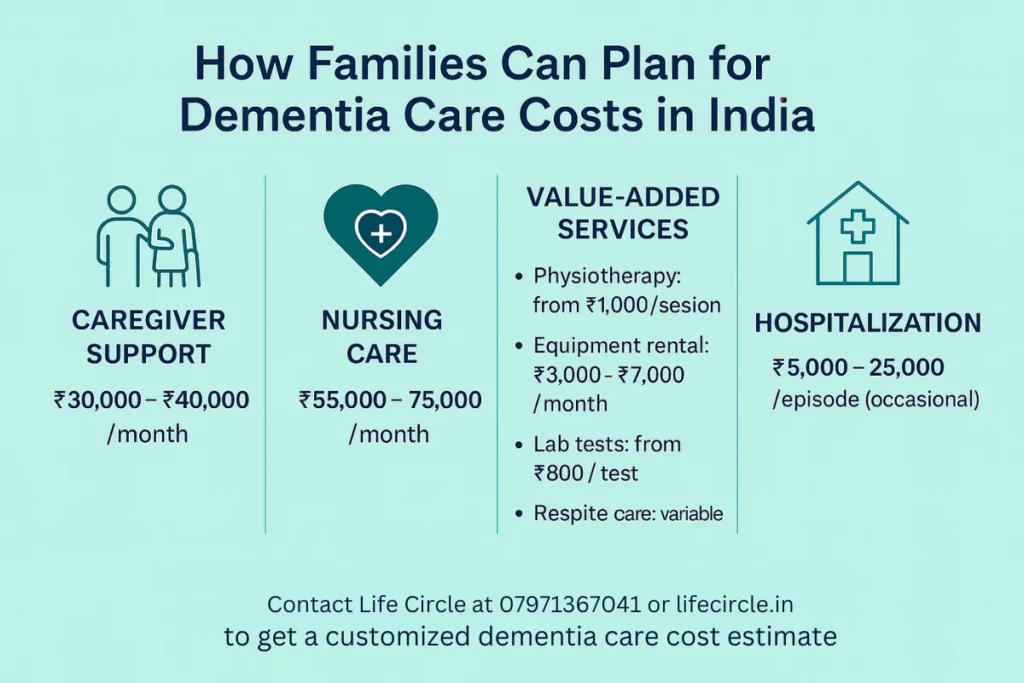
Full-time caregivers for dementia patients typically cost ₹30,000 to ₹40,000 per month in India, depending on the city and caregiver experience. These trained professionals provide essential daily support including:
- Personal hygiene assistance
- Medication management
- Meal preparation and feeding
- Mobility assistance
- Behavioral support and companionship
The variation in caregiver pricing across different cities reflects local economic conditions, demand, and the complexity of dementia care required.
Skilled Nursing Care Expenses
Seniors with advanced dementia may require skilled nursing care at home, which costs ₹55,000 to ₹75,000 per month. This level of care includes:
- Vital sign monitoring
- Wound care and management
- Medical administration and observation
- Catheter care and other specialized procedures
- Coordination with physicians
Additional Value-Added Services
Beyond basic caregiving and nursing, families should budget for supplementary services:
Physiotherapy at home: Starting from ₹1,000 per session (typically 2-3 times weekly)
Medical equipment rental: ₹3,000–₹7,000 per month (wheelchairs, beds, oxygen concentrators)
Lab tests at home: Starting ₹800 per test for routine blood work and diagnostics
Respite care: Variable pricing depending on duration and intensity of care needed
Nutritional supplements: ₹2,000–₹5,000 per month for specialized dementia-friendly nutrition
Hospitalization and Emergency Costs
Occasional hospital visits, emergencies, or treatment for co-morbid conditions (like diabetes, hypertension, or urinary tract infections) can add ₹5,000–₹25,000 per episode. These unexpected expenses can significantly impact annual budgets, making insurance planning essential.
How to Plan Dementia Care Expenses: A Step-by-Step Approach
Proactive financial planning can reduce stress and ensure sustainable dementia care. Here’s how to structure your planning:
Step 1: Calculate Your Monthly Budget
Begin by listing all recurring costs associated with dementia care:
- Core caregiving costs — full-time or part-time attendant fees
- Nursing and medical supervision — if required by patient condition
- Medications — dementia-related and co-morbid condition treatments
- Therapy sessions — physiotherapy, occupational therapy, speech therapy
- Nutrition and dietary supplements — specialized dementia-appropriate foods
- Medical equipment — ongoing rental or maintenance
- Hygiene and comfort supplies — incontinence products, bedding, grooming items
- Utility and home modifications — increased electricity for care equipment, safety modifications
Create a spreadsheet tracking these expenses for 3-6 months to establish accurate baseline costs.
Step 2: Compare Service Providers and Dementia Caregiver Pricing India
When evaluating dementia caregiver pricing in India, compare comprehensive packages offered by elder care providers:
- Check what’s included in each pricing tier
- Verify caregiver qualifications and training certifications
Understand supervision protocols — how often nurses visit and assess care
Ask about hidden costs — setup fees, emergency charges, service taxes
Request transparent itemized billing from all providers
Transparency in pricing is fundamental to avoiding unexpected costs and building trust with your care provider.
Explore Insurance and Government Support Options
Several financial assistance pathways exist for dementia care:
Health Insurance Coverage:
Some health insurance policies cover dementia-related hospitalizations or long-term care under chronic illness riders. Families should:
- Review existing policy terms carefully
- Look for policies specifically covering neurodegenerative diseases
- Check waiting periods and coverage limits
- Understand co-payment and claim procedures
Government Schemes:
The SAGE (Seniorcare Ageing Growth Engine) program and similar government initiatives sometimes provide:
- Subsidized caregiver services
- Caregiver training programs
- Respite care support
- Equipment assistance programs
NGO and Community Support:
Many NGOs offer subsidized dementia support services, counseling, and caregiver training, helping reduce overall care costs.
Step 4: Plan for Home Dementia Care Cost Management
Home dementia care cost can be optimized through smart planning:
- Combine services efficiently— integrated packages often offer better rates
- Stagger non-urgent services— balance monthly expenses across quarters
- Invest in prevention — physiotherapy and medical supervision reduce hospital visits
- Utilize technology — health monitoring apps reduce unnecessary clinic visits
- Plan for long-term care — bulk equipment purchases sometimes offer discounts
How Life Circle Supports Families with Dementia Care
Life Circle understands the financial burden of dementia care and offers comprehensive, transparent solutions. Our dementia care costs in India are competitively priced starting from ₹30,000/month for attendant care and ₹55,000/month for skilled nursing care, depending on the level of support needed.
Our Comprehensive Support Model
Families working with Life Circle receive:
- Trained dementia caregivers — certified professionals with specialized dementia care training through CareVidya Academy
- Professional nursing supervision — periodic home visits by qualified nurses to assess and optimize care
- Integrated therapeutic services— access to physiotherapy, occupational therapy, and other specialized care
- Quality medical equipment — rental options for beds, wheelchairs, and monitoring equipment
- Transparent billing practices — no hidden costs, detailed itemized invoices, flexible payment options
- 24/7 support and emergency assistance — dedicated care coordinators available for family communication
Service Availability
Key Considerations for Long-Term Dementia Care Planning
Budget for Progressive Care Needs
Dementia is progressive, meaning care requirements typically increase over time. Your financial plan should account for:
- Early-stage dementia — may require only part-time caregiving support
- Middle-stage dementia— typically requires full-time caregiving and increasing medical supervision
- Late-stage dementia — may necessitate skilled nursing care and specialized equipment
Allocate 15-20% additional budget annually to account for escalating care needs.
Account for Behavioral and Psychological Support
Dementia often involves behavioral challenges requiring specialized management:
- Professional behavioral support consultations
- Caregiver training in de-escalation techniques
- Medication management for behavioral symptoms
- Counseling for family members managing caregiver stress
Plan for Caregiver Continuity
Continuity of care improves patient outcomes and reduces unnecessary hospitalizations:
- Budget for stable, long-term caregiver retention
- Factor in annual salary increases (typically 10-15%)
- Plan for backup caregiver coverage during absences
- Invest in caregiver wellness to reduce turnover
Conclusion
Dementia care is a long-term commitment requiring thoughtful financial planning. By estimating costs early, exploring insurance options, understanding available government support, and choosing transparent providers like Life Circle, families can ensure their seniors receive quality dementia support without financial strain.
The key to successful dementia care cost management is proactive planning, regular budget reviews, and partnering with reliable care providers who prioritize transparency and family communication. With proper planning, families can focus on what matters most — providing compassionate, quality care for their loved ones while maintaining financial stability.