25-09-2025
Home Care vs Assisted Living India: Expert Guide for 7,000+ Families
Written By: Nagaraju Raparthi, Senior Content & Care Story Writer
Introduction:
Choosing the right eldercare option is one of the most important decisions families in India face today. With India’s aging population growing rapidly, understanding home care vs assisted living India has become essential for families seeking the best care solutions for their seniors.
While home care and assisted living are both designed to support seniors, they differ significantly in how care is delivered, the role of families, costs involved, and the overall living experience. This comprehensive guide will help you understand both options and make an informed decision based on your parent’s needs and your family’s circumstances.
Understanding Home Care vs Assisted Living India
Before making a decision, it’s crucial to understand what each option entails and how they differ fundamentally in their approach to senior care.
What Is Home Care?
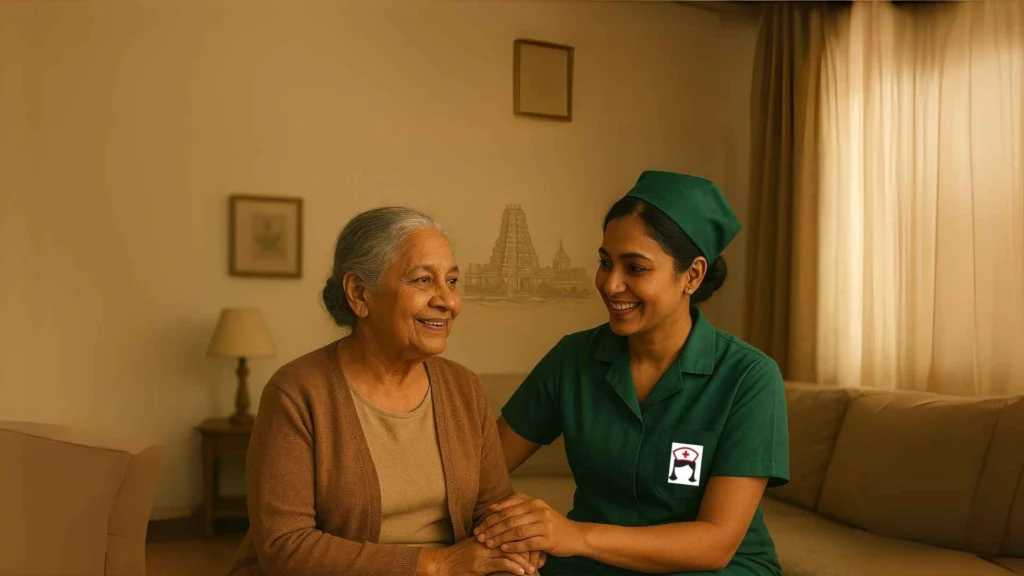
Home care allows seniors to remain in their own homes while receiving professional support from trained caregivers and nurses. This model has become increasingly popular in India as families recognize the importance of maintaining independence and familiarity for their elderly loved ones.
In home care, trained caregivers or nurses visit or stay with the senior, providing assistance with:
Daily living activities (bathing, dressing, grooming)
- Mobility support and fall prevention
- Medication reminders and management
- Companionship and emotional support
- Specialized care such as dementia care, post-surgery recovery, and palliative care
Best suited for:
- Seniors who prefer the comfort and familiarity of their own homes
- Those with strong family support systems
- Seniors requiring flexible levels of care based on changing needs
- Individuals who value privacy and independence
Types of Care Provided in Home Care:
- Attendant Care: Assistance with daily activities and personal hygiene
- Nursing Care: Medical supervision and healthcare management
- Physiotherapy: Rehabilitation and mobility support
- Dementia Care: Specialized support for cognitive decline
- Palliative Care: Comfort-focused care for serious illnesses
Home Care Costs in India
Home care costs vary based on the level of care required, location, and duration of service. Here’s what families can expect:
Attendant Care:
- Starts from ₹950 per day (approximately ₹29,000 per month)
- Includes personal care assistance and daily living support
- Flexible scheduling options available
Nursing Care:
- Starts from ₹2,500 per day (approximately ₹75,000 per month)
- Includes medical supervision and healthcare services
- 24/7 availability for critical care needs
Geographic Availability:
Home care services are available across major Indian cities including Hyderabad, Bengaluru, Chennai, Mumbai, Pune, Delhi NCR, Noida, Gurgaon , Chandigarh, Navi Mumbai, Mysuru, Vizag, Vijayawada making it accessible for families nationwide.
What Is Assisted Living?
Assisted living facilities provide residential care in a dedicated setting where seniors move into shared or private apartments within a community environment. This model combines independent living with available support services.
In assisted living, residents receive:
- Accommodation in a safe, designed living space
- Prepared meals and nutritional support
- 24/7 staff support and supervision
- Assistance with activities of daily living
- Social activities and recreational programs
- Basic medical oversight and emergency response
Best suited for:
- Seniors who benefit from a community setting and social interaction
- Those with limited family support or family members unable to provide daily care
- Individuals who prefer structured daily routines and scheduled activities
- Seniors requiring 24/7 supervision but not intensive medical care
Assisted Living Costs in India
Assisted living facilities in India typically charge:
₹40,000–₹1,00,000 per month depending on location, services offered, and facility quality
- Higher costs in metropolitan areas like Mumbai, Delhi NCR, and Bengaluru
- Lower costs in tier-2 cities
- Premium facilities may exceed ₹1,00,000 per month
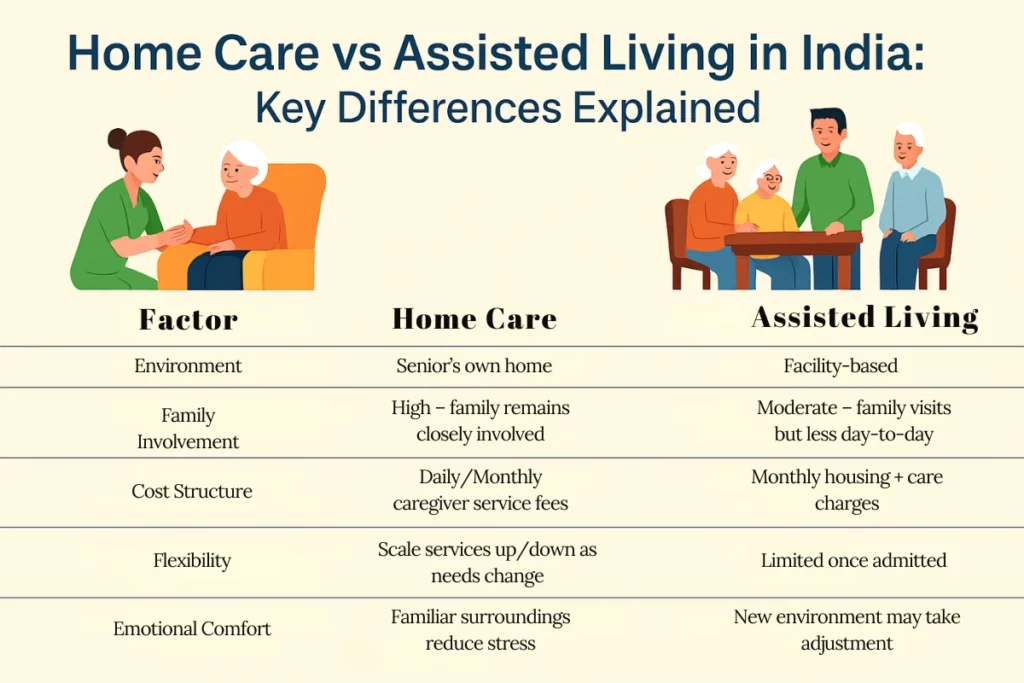
Key Differences: Home Care vs Assisted Living India
Home Care: Senior remains in their own familiar home environment with personal belongings and memories intact. This maintains continuity and comfort in their daily life.
Assisted Living: Senior moves to a residential facility, requiring adjustment to a new environment. However, this offers a structured community setting with built-in social opportunities.
Cost Comparison
Home Care: More cost-effective for basic attendant care (₹29,000/month), though specialized nursing care can be comparable or higher than assisted living.
Assisted Living: Generally ₹40,000–₹1,00,000 per month, with costs increasing based on amenities and location. Total costs can be significantly higher over time.
Family Involvement
Home Care: Requires active family involvement in coordination, decision-making, and caregiver management. Families remain primary decision-makers.
Assisted Living: Staff manages daily care, reducing direct family involvement in caregiving but requiring oversight of facility care quality.
Flexibility and Customization
Home Care: Highly flexible; care can be adjusted based on changing needs, with caregivers adapting to the senior’s preferences and schedule.
Assisted Living: More structured; seniors must adapt to facility schedules and routines, though some customization may be available.
Social Interaction
Home Care: Depends on family visits and caregiver companionship; seniors may experience social isolation if family support is limited.
Assisted Living: Built-in community with other residents, organized activities, and regular social engagement opportunities.
Medical and Specialized Care
Home Care: Can accommodate specialized medical care including nursing, physiotherapy, and dementia care with appropriate caregiver qualifications.
Assisted Living: Provides basic medical oversight; complex medical needs may require external healthcare services or specialized facilities.
Senior Care Options India: Making the Right Choice
Deciding between home care and assisted living depends on several factors specific to your situation:
Choose Home Care If:
- Your parent strongly prefers staying in their familiar home
- Family members can coordinate and oversee care arrangements
- Your parent has specific healthcare needs requiring personalized attention
- Cost is a significant consideration for attendant-level care
- Your parent values privacy and independence
- Your parent has cognitive abilities to make decisions about their care
Choose Assisted Living If:
- Your parent requires 24/7 supervision and you cannot provide it at home
- Social interaction and community activities are important for their wellbeing
- Family members cannot commit time to caregiving coordination
- Your parent would benefit from structured daily routines
- Multiple medical professionals need coordinated access to the resident
- Your parent’s home environment is unsuitable for safe aging (stairs, isolation, etc.)
Home Nursing India: The Professional Advantage
Home nursing services have revolutionized senior care in India, offering professional medical care without requiring seniors to leave their homes. Trained nurses can manage:
- Post-operative care and wound management
- Chronic disease management (diabetes, hypertension, cardiac care)
- Catheter and feeding tube care
- Pain management and palliative care
- Medication administration and monitoring
- Health monitoring and vital sign tracking
Eldercare Costs: Budgeting for Senior Care
Understanding eldercare costs helps families plan financially for long-term care:
Monthly Budget Comparison:
- Basic home attendant care: ₹29,000–₹40,000
- Home nursing care: ₹75,000–₹1,50,000
- Assisted living: ₹40,000–₹1,00,000
- Premium assisted living: ₹1,00,000+
Additional Costs to Consider:
- Home modifications for safety
- Medical equipment and supplies
- Transportation and mobility aids
- Medications and healthcare services
- Emergency response systems
Senior Care Decision India: Final Considerations
Making a senior care decision in India requires careful consideration of multiple factors:
Assess Your Parent’s Needs:
- Current health status and mobility
- Cognitive abilities and independence level
- Medical complexity and specialized care requirements
- Social and emotional needs
- Preferences regarding living arrangements
Evaluate Family Resources:
- Time availability for care coordination
- Financial capacity for care expenses
- Emotional readiness for caregiving role
- Family stability and long-term sustainability
- Access to extended family support
Consider Practical Factors:
- Home environment suitability for modifications
- Proximity of family members to the senior
- Availability of quality care providers in your area
- Cultural and personal values regarding aging and care
Conclusion
Both home care and assisted living offer valuable benefits for seniors in India. Home care vs assisted living India isn’t about choosing right or wrong—it’s about choosing what works best for your parent’s unique situation, your family’s capacity, and your available resources.
Home care excels at providing personalized, flexible care while allowing seniors to age in place with dignity and comfort. Assisted living offers structured environments, built-in communities, and 24/7 professional supervision for those who need it.
Take time to assess your parent’s needs thoroughly, discuss options with your family, and consider consulting healthcare professionals. The best decision is one made thoughtfully, with your parent’s wellbeing and preferences at the center of your choice.