28-09-2025
Affordable Long-Term Care Seniors India: What You Need to Know
Written By: Nagaraju Raparthi, Senior Content & Care Story Writer
Introduction:
India’s aging population is growing at an unprecedented rate, and with it comes an increasing demand for long-term care seniors India. Families across the country are asking critical questions: How many seniors actually require long-term care in India? What does this care involve? And how can we afford it?
Understanding these questions is essential for families preparing for future care needs while also recognizing the significant opportunities and challenges in the elder care sector. Research indicates that approximately 15–18% of seniors in India require some form of long-term care, representing millions of individuals who depend on structured care solutions to maintain their quality of life.
This comprehensive guide explores the scope of long-term care seniors India, the types of care available, the challenges families face, and how professional care providers like Life Circle are transforming senior care across the country.
The Growing Senior Population in India
India is experiencing a demographic shift that demands imm ediate attention and planning. The elderly population is not only growing in numbers but also in proportion to the overall population
Key Statistics on India’s Senior Population
- India has over 140 million people aged 60 and above, according to Census data and UN projections.
- By 2030, seniors will comprise nearly 20% of India’s total population, making India a rapidly aging nation.
- Longer lifespans mean more seniors are living with chronic illnesses and age-related conditions that require ongoing medical and personal care.
Urban centers are experiencing higher demand for structured care services due to nuclear family structures and migration of younger generations abroad.
This demographic transformation creates both challenges and opportunities. Families must now plan for extended caregiving periods, while the healthcare and elder care sectors must expand to meet growing demand.
What Percentage of Seniors in India Require Long-Term Care?
Understanding the Numbers
When examining global and national statistics, the scope of elderly long-term care India becomes clearer:
- Globally, approximately 20–25% of seniors require some form of structured long-term care.
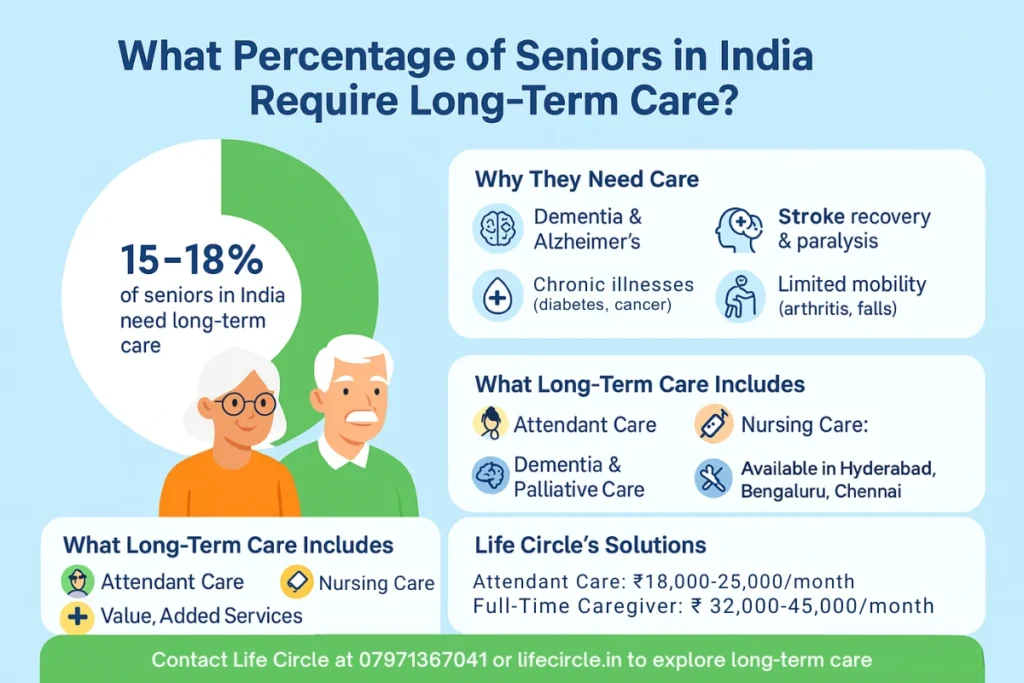
- In India, estimates suggest 15–18% of seniors need regular assistance with daily living activities and medical support.
- This percentage is expected to rise as the population ages and life expectancy increases.
Who Needs Long-Term Care?
Seniors requiring senior care needs include those managing:
- Dementia and Alzheimer’s Disease: Memory loss, confusion, and behavioral changes require specialized attention and constant supervision.
- Stroke Recovery and Paralysis: Seniors recovering from strokes need rehabilitation, mobility assistance, and nursing care.
- Chronic Illnesses: Conditions such as diabetes, hypertension, cancer, COPD, and heart disease require regular monitoring and medication management.
- Limited Mobility: Arthritis, falls, and joint issues restrict independence and necessitate daily assistance.
- Post-Operative Care: Recovery from surgeries requires wound care, physiotherapy, and medical supervision.
- Palliative and End-of-Life Care: Seniors with terminal illnesses need comfort care and pain management.
Higher Demand in Major Cities
📌 Urban cities including Hyderabad, Bengaluru, Delhi, Mumbai, Pune, Chennai, and other metropolitan areas experience higher demand for long-term care seniors India due to:
- Nuclear family structures replacing joint family systems
- Children migrating abroad for employment
- Fewer available family members to provide daily care
- Greater awareness and access to professional care services
What Does Long-Term Care Include?
Comprehensive long-term care seniors India encompasses multiple types of support tailored to individual needs:
Attendant Care Services:
Attendant care provides daily assistance with:
- Bathing, grooming, and personal hygiene
- Feeding and meal preparation
- Mobility support and transfer assistance
- Toileting and continence care
- Dressing and organizing medications
Professional Nursing Care:
Nursing care is essential for seniors with complex medical needs:
- Intravenous (IV) therapy and injections
- Wound dressing and care
- Catheter management
- Chronic illness monitoring and management
- Medication administration and tracking
- Health monitoring and vital sign checks
Dementia Care and Specialized Support:
Dementia care India addresses the unique challenges of Alzheimer’s disease and dementia:
- 24/7 supervision to prevent wandering and accidents
- Managing behavioral changes and memory loss
- Structured daily routines and activities
- Specialized training for caregivers in dementia management
- Emotional support for both seniors and families
Palliative and End-of-Life Care:
Palliative care focuses on comfort and dignity:
- Pain and symptom management
- Emotional and spiritual support
- Family counseling and guidance
- Coordination with healthcare providers
Value-Added Services:
Comprehensive long-term care includes additional support:
- Physiotherapy and Rehabilitation: Improving mobility and strength
- Lab Tests at Home: Convenient health monitoring without clinic visits
- Medical Equipment Rental: Hospital beds, wheelchairs, oxygen concentrators, and walkers
- Regular Health Monitoring: Nurse visits for oversight and medical supervision
- Digital Monitoring: Apps and systems for real-time health tracking and family updates
Major Challenges Families Face with Long-Term Care
Understanding the Complexity:
Families seeking long-term care seniors India encounter multiple obstacles that can affect decision-making and care quality:
Financial Challenges:
- Underestimated Costs: Many families are unprepared for the true expense of long-term care, which ranges from ₹18,000 to ₹45,000 per month depending on care intensity.
Hidden Expenses: Additional costs for medications, medical equipment, special foods, and emergencies often surprise families.
- Limited Insurance Coverage: Most health insurance policies don’t adequately cover long-term care expenses.
- Long-Term Financial Planning: Sustaining care for 5-10+ years requires significant financial reserves.
Awareness and Access Gaps
- Lack of Knowledge: Many families don’t realize that structured, professional caregiving services exist and are available in their cities.
Informal Care Dependency: Reliance on untrained domestic help leads to quality and safety concerns.
- Limited Options: Families in smaller cities may have fewer professional care providers to choose from.
- Trust and Credibility Issues: Finding reliable, trained caregivers is challenging without proper vetting systems.
Emotional and Social Burden
Guilt and Stress: Children living abroad experience emotional distress when unable to provide daily care for aging parents.
Caregiver Burnout: Family members providing full-time care face physical exhaustion and psychological strain.
- Work-Life Balance: Balancing employment with caregiving responsibilities creates significant stress.
- Family Conflicts: Different family members may have conflicting views on care decisions and financial contributions.
Affordable Long-Term Care Solutions for Seniors
Professional Care Options
Life Circle addresses these challenges by offering affordable long-term care seniors India across major cities:
Service Coverage: Hyderabad, Bengaluru, Chennai, Mumbai, Pune, Delhi NCR, Noida, Gurgaon, Chandigarh, and Navi Mumbai.
Flexible Care Packages
Life Circle provides multiple options to match family budgets and care requirements:
Attendant Care Packages: ₹18,000–₹25,000 per month
- Daily assistance with personal hygiene, feeding, and mobility
- Suitable for seniors with mild to moderate care needs
Flexible scheduling options (part-time or full-time)
Full-Time Caregiver Packages: ₹32,000–₹45,000 per month
- Round-the-clock care with dedicated caregivers
- Comprehensive assistance with all daily living activities
Ideal for seniors requiring constant supervision
Professional Nursing Care: Starting at ₹40,000 per month
- Registered nurses providing medical supervision
- Advanced wound care, injections, and medical management
Suitable for post-operative recovery and complex medical conditions
Specialized Care Programs:
- Dementia Care: Trained caregivers experienced in managing behavioral and cognitive challenges
- Palliative Care: Compassionate end-of-life support and comfort care
Stroke and Mobility Recovery: Rehabilitation-focused care with physiotherapy integration
Quality Assurance and Monitoring
Life Circle ensures consistent, high-quality care through:
- Trained and Vetted Caregivers: All caregivers undergo thorough background checks, health screenings, and professional training.
Nurse Supervision: Regular visits from registered nurses monitor health, adjust care plans, and ensure quality.
Digital Monitoring: The Life Circle App enables families to track care in real-time, receive updates, and communicate with caregivers.
24/7 Support: Dedicated customer support team available for emergencies and concerns.
Care Plan Customization: Individualized care plans developed based on specific medical and personal needs.
Planning for Long-Term Care: A Family Guide
Key Considerations
- Assess Care Needs Early: Understand your senior’s current and projected care requirements.
- Financial Planning: Calculate realistic monthly costs and explore funding options (savings, insurance, family contributions).
- Research Providers: Choose established, reputable care providers with proper credentials and experience.
- Quality Over Cost: Prioritize quality and safety rather than selecting based solely on price.
- Trial Periods: Start with shorter engagements to ensure compatibility and satisfaction.
- Regular Reviews: Periodically reassess care plans as health conditions evolve.
Conclusion
Approximately 1 in 5 seniors in India requires some form of long-term care, and this number continues to rise due to aging demographics and increasing life expectancy. Understanding what long-term care seniors India involves—from basic attendant care to specialized nursing and dementia support—helps families make informed decisions.
The challenge is not only recognizing the need for care but also finding affordable, trustworthy solutions that provide dignity, safety, and compassion. By planning early, understanding available options, and partnering with professional care providers, families can ensure their seniors receive the support they deserve while managing costs effectively.
Whether your parent requires help with daily activities, specialized dementia care India, or comprehensive nursing support, professional long-term care seniors India services can transform the caregiving experience for both seniors and families, ensuring peace of mind and improved quality of life for all involved.